
The Hook
Choosing among Chinese 3D printer suppliers is difficult because “best” depends on the application rather than on a single specification. A dental laboratory may need a compact metal system, while an aerospace team may prioritize industrial materials, process control, and application engineering. Some suppliers sell equipment, some provide printing services, and some operate as industry platforms or event organizations, so they are not directly interchangeable. This guide evaluates the seven supplied options using information available from their official websites and research dossiers. The options were reviewed against product focus, stated technologies, materials, market scope, and documented service strengths. Where public information was not clearly available, that limitation is stated rather than inferred.
Full List of Top 7 Brands
- TCT Asia
- Anebon
- China 3D Printing
- 深圳3D打印展览会_深圳国际3D打印、增材制造及精密成型展览会_FormnextAsiaShenzhen
- 3D FastForm
- IN3DTEC
- Lyafs
Comparison Table
| Brand | Key Products | Key Features | Best For |
|---|---|---|---|
| TCT Asia | Industry platform and additive-manufacturing exhibition resource | Officially focused on the TCT Asia brand; detailed product specifications were not available in the supplied research material | Industry discovery, supplier comparison, and additive-manufacturing networking |
| Anebon | Online 3D printing services, CNC milling and turning, EDM, surface grinding, sheet-metal and precision parts | Six stated 3D-printing technologies, custom production, reported tolerances as demanding as ±0.01 per 100 mm, and ISO 9001:2015 certification claim | Custom prototypes, precision components, and production parts |
| China 3D Printing | Metal 3D printing, MJF, SLS, FDM, and related plastic and metal production services | Materials listed include aluminum, stainless steel, titanium, nickel alloys, PA powders, ABS, PLA, PEEK, TPU, and others | Industrial prototypes and functional plastic or metal parts |
| 深圳3D打印展览会_深圳国际3D打印、增材制造及精密成型展览会_FormnextAsiaShenzhen | 3D-printing, additive-manufacturing, and precision-forming exhibition | Public research material identifies the exhibition name and website but does not document specific products or services | Industry events and supplier discovery |
| 3D FastForm | Metal SLM equipment, including the FF-M140C dental metal 3D printer | Application focus covering aerospace, industrial manufacturing, molds, and precision medicine; CE certification is stated | Dental metal printing and specialized industrial additive manufacturing |
| IN3DTEC | Product and service range not clearly documented in the supplied research material | Public dossier confirms the brand but does not provide sufficiently specific product or technology details | Further supplier evaluation after direct technical verification |
| Lyafs | Industrial 3D printers and casting services, according to the supplied positioning statement | Positioned as an industrial 3D-printer manufacturer and casting service provider; detailed materials and specifications were not available | Industrial equipment and casting-service enquiries |
Detailed Reviews
1. TCT Asia
Overview
TCT Asia is ranked first in this list because it is a useful starting point for understanding the Chinese additive-manufacturing landscape and comparing suppliers in one industry-focused environment. The supplied official URL is the English-language TCT Asia website. The available research material does not provide a verified company founding date, manufacturing catalogue, material list, printer model list, or technical specification sheet. It is therefore more accurate to treat TCT Asia as an industry platform and exhibition resource rather than automatically describing it as a printer manufacturer.

For buyers, that distinction matters. An industry platform can help identify equipment makers, material companies, software vendors, service bureaus, and application specialists, but it may not itself be the company that manufactures or operates a particular printer. Users should confirm the legal supplier, equipment manufacturer, after-sales organization, warranty terms, and process qualifications for every prospective purchase discovered through the platform.
Pros / Key Features
- Provides a dedicated source for exploring the Asian additive-manufacturing ecosystem.
- Useful for comparing supplier categories before requesting technical quotations.
- Can support market research and industry networking across 3D-printing applications.
- The official English-language website makes the resource more accessible to international visitors.
- Specific printer models, materials, certifications, delivery commitments, and production capabilities should be verified directly because they were not documented in the supplied research dossier.
Use Cases / Best For
TCT Asia is best suited to procurement teams beginning supplier discovery, companies planning industry visits, technology researchers, and manufacturers comparing additive-manufacturing ecosystems. It is also relevant when a buyer wants to locate several potential partners before narrowing the field by technology, material, build volume, application, or geographic support. It should not be treated as a substitute for technical due diligence on an individual printer supplier.
2. Anebon
Overview
Anebon is presented as a Chinese on-demand manufacturing provider focused on custom precision parts. Its research dossier describes CNC milling and turning, EDM, surface grinding, sheet-metal fabrication, rapid prototyping, and online 3D-printing services. The dossier also states that the online 3D-printing service uses six technologies to produce plastic, metal, and elastomeric products. Anebon’s positioning is centered on producing parts from customer design specifications rather than selling a single standardized printer model.
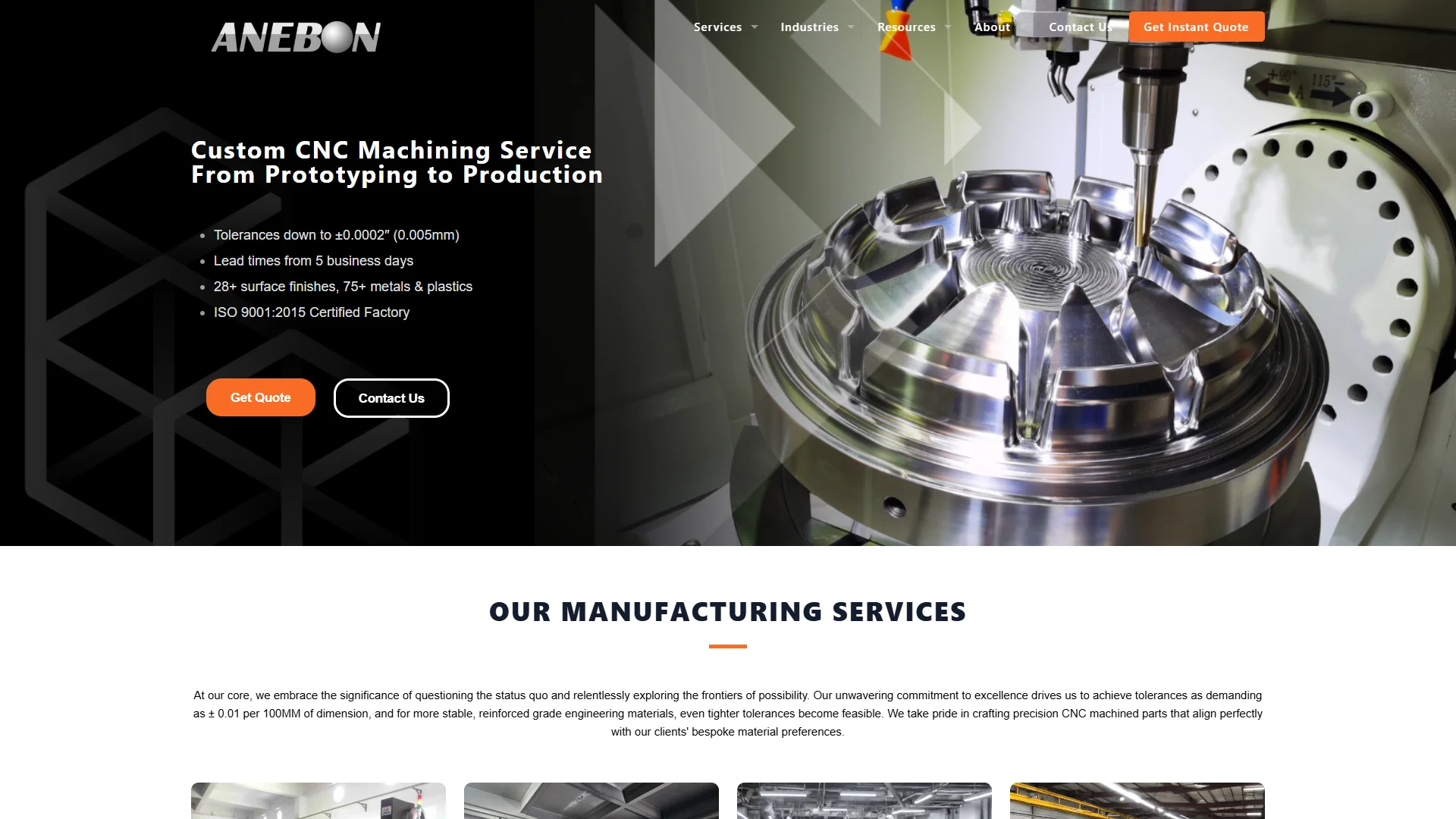
The company states that it can manufacture simple and complex prototypes as well as end-use components. Its materials information is broad but does not provide a complete, verified catalogue in the supplied material. Anebon also reports tolerances as demanding as ±0.01 per 100 mm of dimension, with tighter tolerances potentially feasible for more stable reinforced engineering materials. Such figures should be confirmed against the specific part geometry, material, process, inspection method, and drawing requirements.
Pros / Key Features
- Combines 3D printing with CNC machining, turning, EDM, surface grinding, and sheet-metal fabrication.
- Supports custom prototypes and production components based on customer drawings or models.
- States that engineering support can help identify design issues and improve cost-effectiveness in production projects.
- Reports experience with precision machining and rapid prototyping.
- The supplied dossier records an ISO 9001:2015 certification claim, which buyers should verify with current documentation.
Use Cases / Best For
Anebon may suit product developers that need a combination of additive and subtractive manufacturing, especially when one project includes prototypes, machined parts, or production tooling. It is also relevant for buyers seeking custom metal components and engineering assistance rather than an off-the-shelf desktop printer. Material availability, inspection reports, achievable tolerances, and delivery schedules should be confirmed for each quotation.
3. China 3D Printing
Overview
China 3D Printing is associated in the research dossier with Shenzhen JR Precision Technology Co., Ltd. The dossier states that JR was founded in 2012 and provides professional industrial-quality 3D-printing solutions. Its stated application areas include molds, medical products, aerospace, robotics, consumer electronics, drones, vehicles, home appliances, mechanical devices, and electric tools.
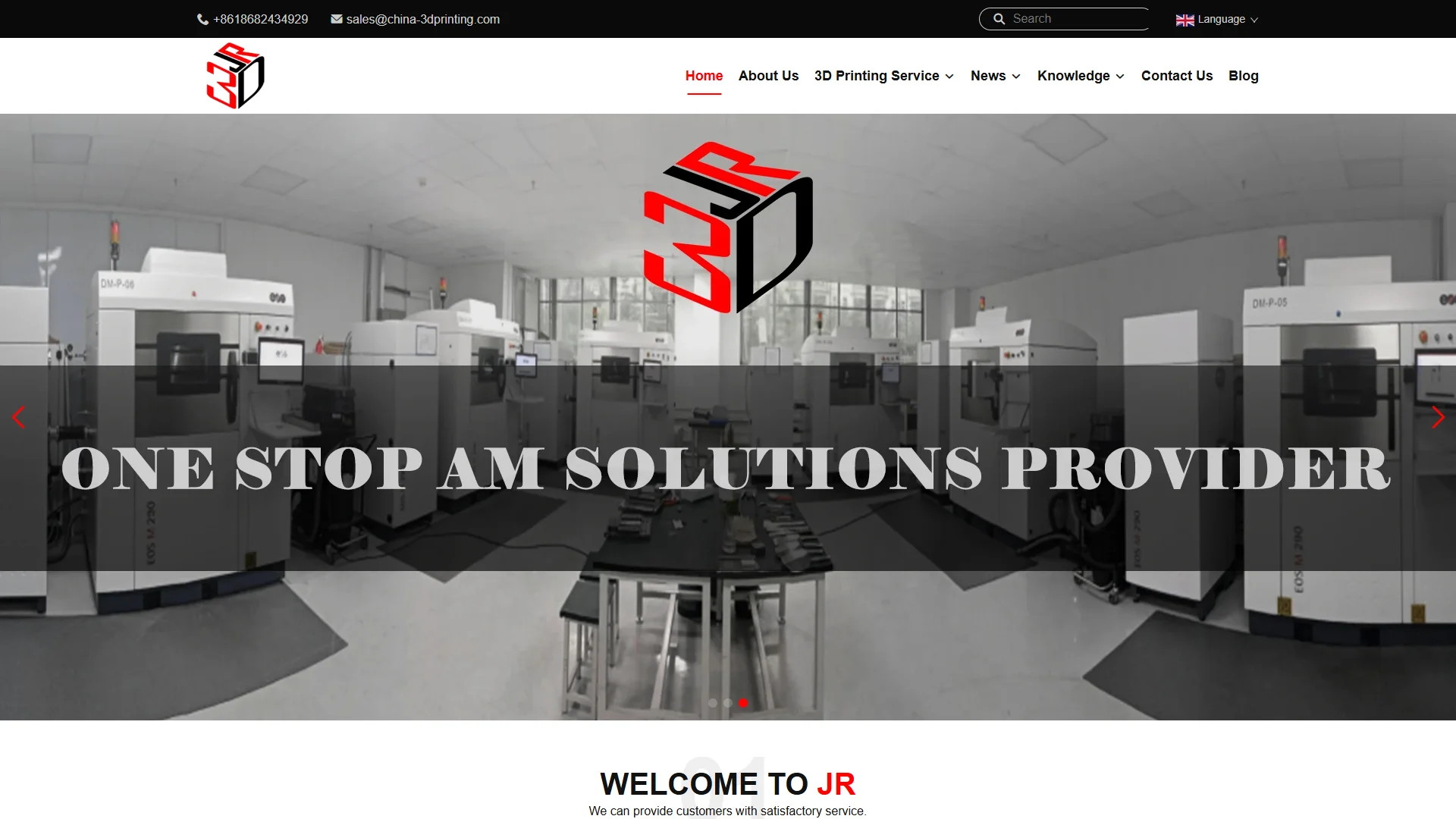
The published technology range is comparatively broad. The supplied material lists direct metal laser sintering or selective laser melting for functional metal products, selective laser sintering for durable unsupported plastic parts, fused deposition modelling for large plastic products, and HP Multi Jet Fusion for functional nylon parts. Listed materials include AlSi10Mg, 316L, Ti6Al4V, IN718, IN625, copper, PA11, PA12, PA12 with glass bead, TPU, PP, ABS, PLA, ASA, PC, nylon, PC-ABS, and PEEK. The dossier also lists indicative lead times of three days for several plastic processes and five days for metal printing; these should be treated as quoted service claims rather than universal delivery guarantees.
Pros / Key Features
- Offers both metal and polymer additive-manufacturing processes.
- Lists a wide selection of engineering metals, thermoplastics, nylon powders, and elastomeric materials.
- Targets industrial applications across medical, aerospace, robotics, automotive, electronics, and tooling sectors.
- Provides multiple process routes, including metal laser powder-bed fusion, SLS, FDM, and MJF.
- The dossier identifies stated partnerships with EOS and Stratasys in Asia; buyers should confirm the current scope of each partnership.
Use Cases / Best For
China 3D Printing is a strong candidate for customers comparing several industrial printing technologies through one service provider. It may be suitable for functional prototypes, nylon components, large polymer parts, metal parts, and applications requiring a choice between powder-bed and extrusion processes. Buyers should request process-specific sample parts, material data, dimensional tolerances, post-processing details, and current lead-time commitments.
4. 深圳3D打印展览会_深圳国际3D打印、增材制造及精密成型展览会_FormnextAsiaShenzhen
Overview
This entry refers to the Shenzhen 3D Printing Exhibition and the Shenzhen International 3D Printing, Additive Manufacturing and Precision Forming Exhibition, also presented as FormnextAsiaShenzhen. The supplied research dossier identifies the exhibition name and official website but does not provide verified information about a printer product line, materials, manufacturing facility, service bureau, founding date, or commercial business model.
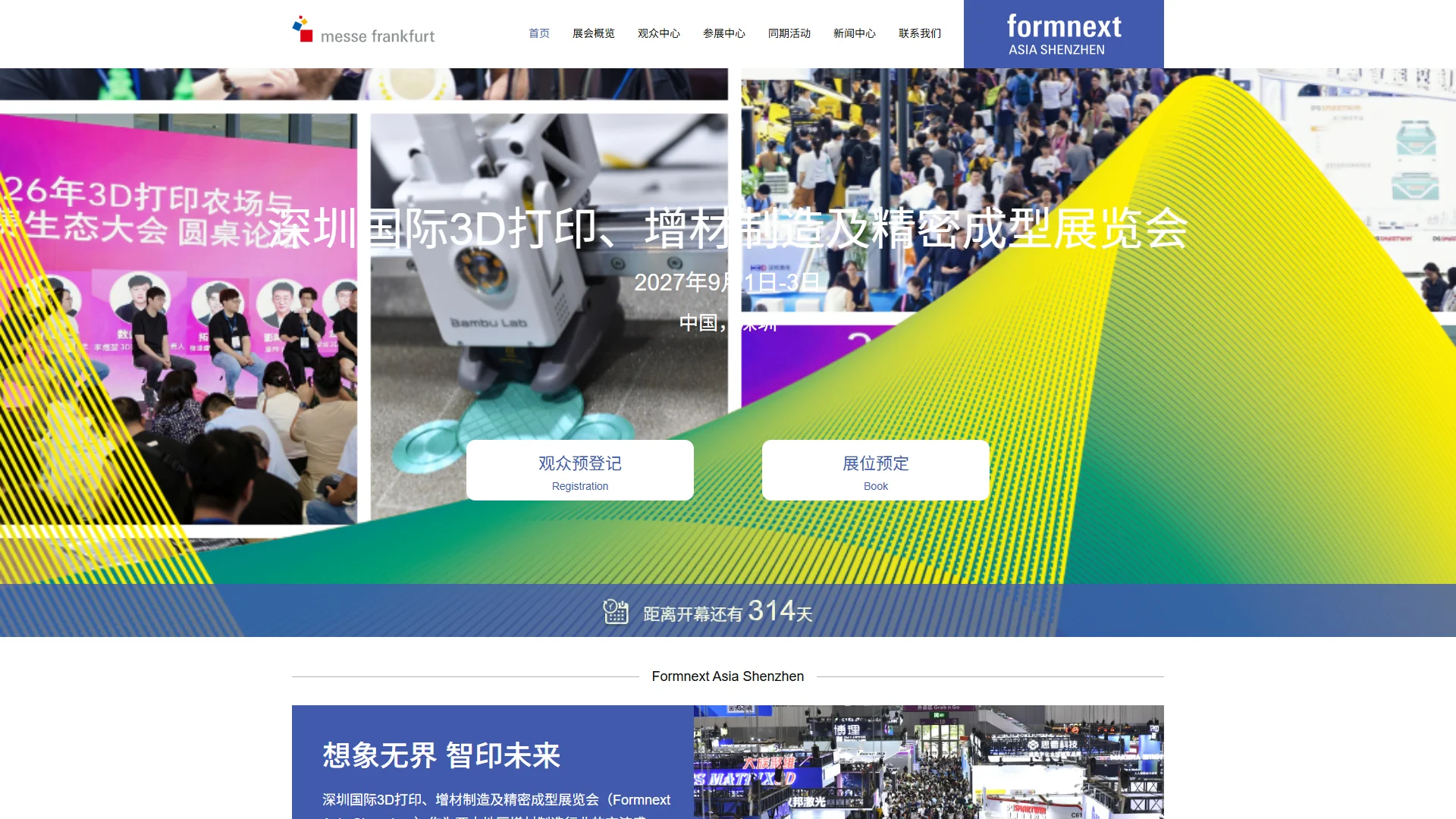
Accordingly, it should be viewed as an exhibition or industry-event resource rather than compared directly with equipment manufacturers and contract printing providers. Its practical value for a buyer lies in supplier discovery, technology scanning, and direct conversations with exhibitors. Any company, machine, or service encountered through the event should be evaluated separately using its own technical documentation and commercial terms.
Pros / Key Features
- Relevant to the 3D-printing, additive-manufacturing, and precision-forming exhibition landscape.
- May help visitors identify equipment makers, material suppliers, software providers, and service companies.
- Useful for comparing multiple vendors in a concentrated industry setting.
- Specific product, material, certification, and service claims were not clearly documented in the supplied dossier.
Use Cases / Best For
This resource is best for procurement teams conducting early-stage market research, visitors seeking supplier meetings, and companies monitoring developments in additive manufacturing and precision forming. It is not, based on the supplied information, a replacement for a direct printer quotation or a validated manufacturing-service agreement.
5. 3D FastForm
Overview
3D FastForm is presented as an additive-manufacturing equipment company with a focus on market-oriented applications. The supplied dossier identifies the FF-M140C as a small SLM metal 3D printer for dental applications and describes the company’s broader application scope as aerospace, high-performance industrial manufacturing, mold manufacturing, and precision medicine.
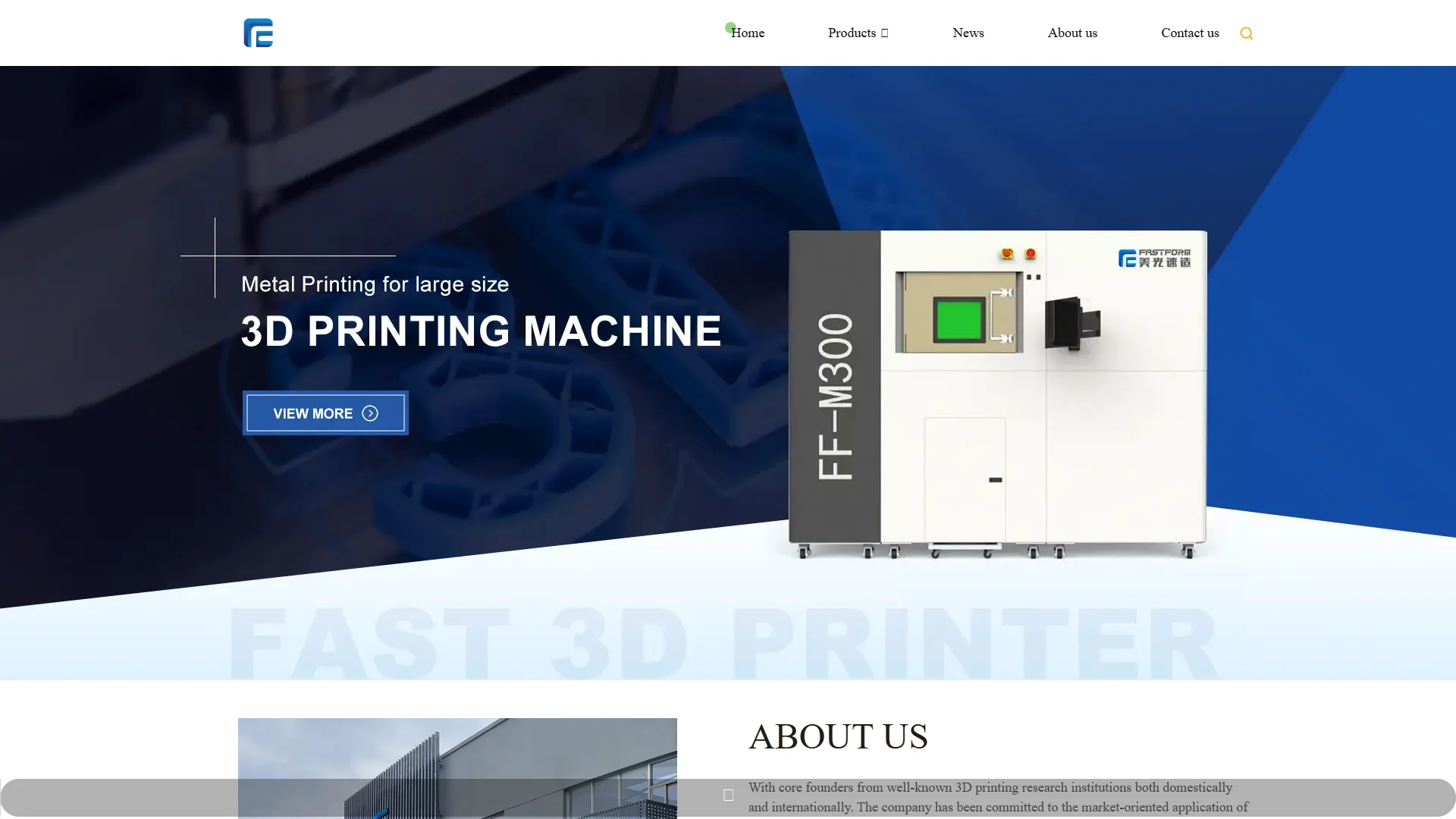
The research material also refers to FastForm Additive Manufacturing innovations shown at TCT Asia 2026, including the AiForm-G1 liquid-cooling green-laser metal 3D printer. Because event claims and product announcements can change over time, buyers should confirm current model availability, build volume, laser configuration, supported alloys, software, and service coverage directly with the supplier.
Pros / Key Features
- Offers a documented focus on metal additive manufacturing using SLM technology.
- Has a specific dental metal printer identified in the supplied material.
- Targets aerospace, industrial manufacturing, mold, and precision-medicine applications.
- The equipment is stated to have completed CE certification.
- The dossier states exports to more than 50 countries and regions, including Europe, America, Japan, South Korea, and Southeast Asia; current export coverage should be verified.
Use Cases / Best For
3D FastForm may be appropriate for dental laboratories, precision-medicine applications, and industrial users evaluating compact or specialized metal powder-bed-fusion equipment. It may also interest manufacturers seeking application-oriented support in molds, aerospace, or high-performance industrial parts. Technical evaluation should include powder handling, atmosphere control, layer thickness, productivity, post-processing, validation support, and operator training.
6. IN3DTEC
Overview
IN3DTEC is included as a Chinese 3D-printing supplier with an official website at in3dtec.com. The supplied research dossier confirms the brand name but does not provide sufficiently clear evidence about its founding date, location, product families, materials, manufacturing processes, certifications, target industries, or competitive advantages. The available sales-channel note refers to online orders and a new-user coupon code, but it does not establish the scope of the company’s industrial capabilities.
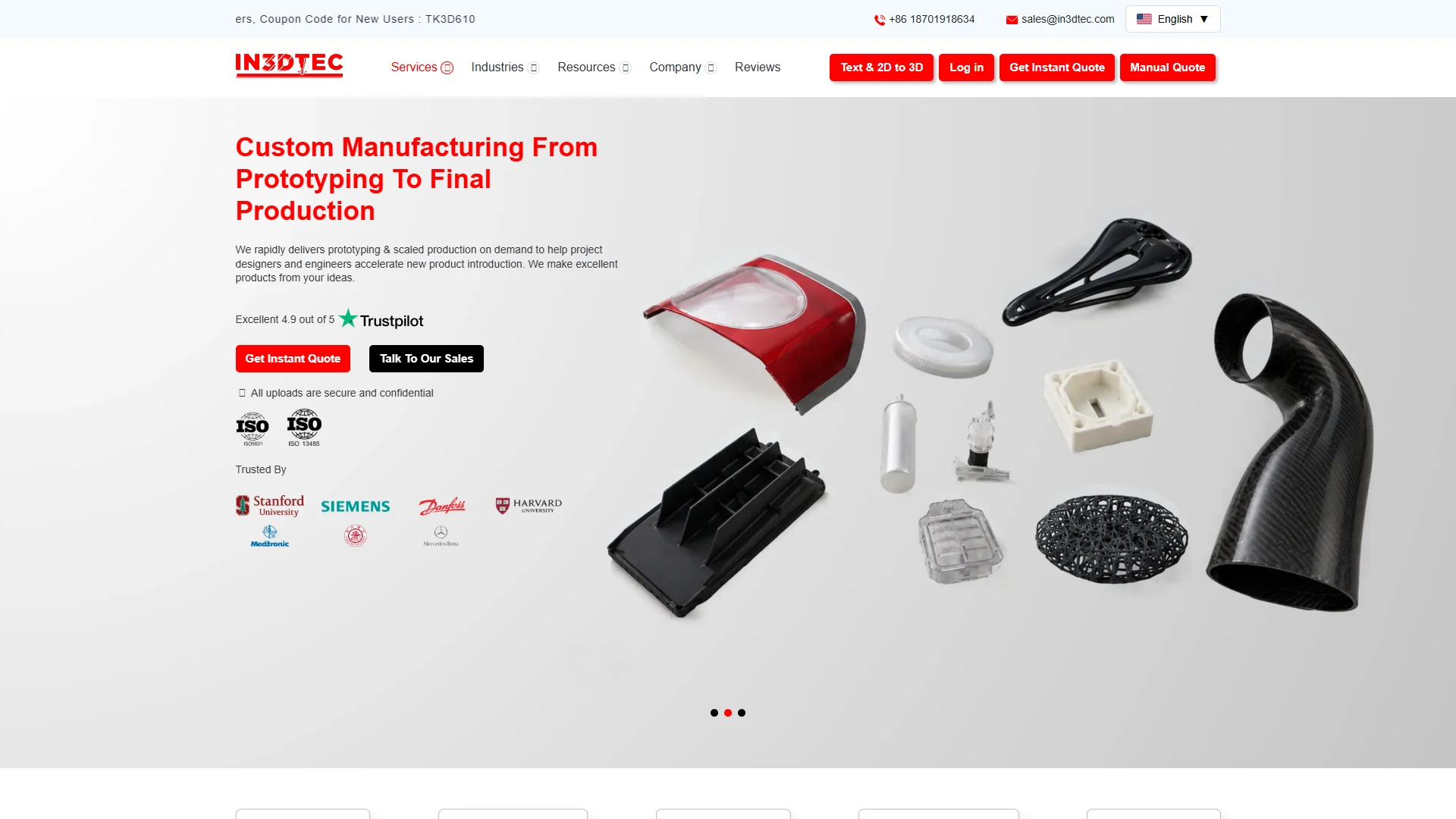
Because the public information supplied for this entry is limited, a responsible comparison cannot assign specific printer technologies or performance figures to IN3DTEC. Prospective customers should request a current catalogue, technical datasheets, supported materials, sample parts, warranty terms, and service-region information before making a purchasing decision.
Pros / Key Features
- Has an official website and an identifiable brand presence.
- Provides an online ordering channel according to the supplied research note.
- Detailed technical and commercial information should be obtained directly before evaluation.
- No unsupported claims about materials, print processes, certifications, or tolerances are made here.
Use Cases / Best For
IN3DTEC is best treated as a supplier requiring additional qualification. It may be worth contacting when a buyer is conducting a broad market search or needs to compare online purchasing options, but the appropriate use case cannot be identified reliably from the supplied dossier alone. A structured request for information is particularly important for industrial or safety-critical parts.
7. Lyafs
Overview
Lyafs is described in the supplied research material as an industrial 3D-printer manufacturer and casting-service provider. The positioning statement also references 3DPTEK, but the dossier does not provide a verified printer catalogue, process list, material range, location, founding history, customer profile, certification record, or delivery information.
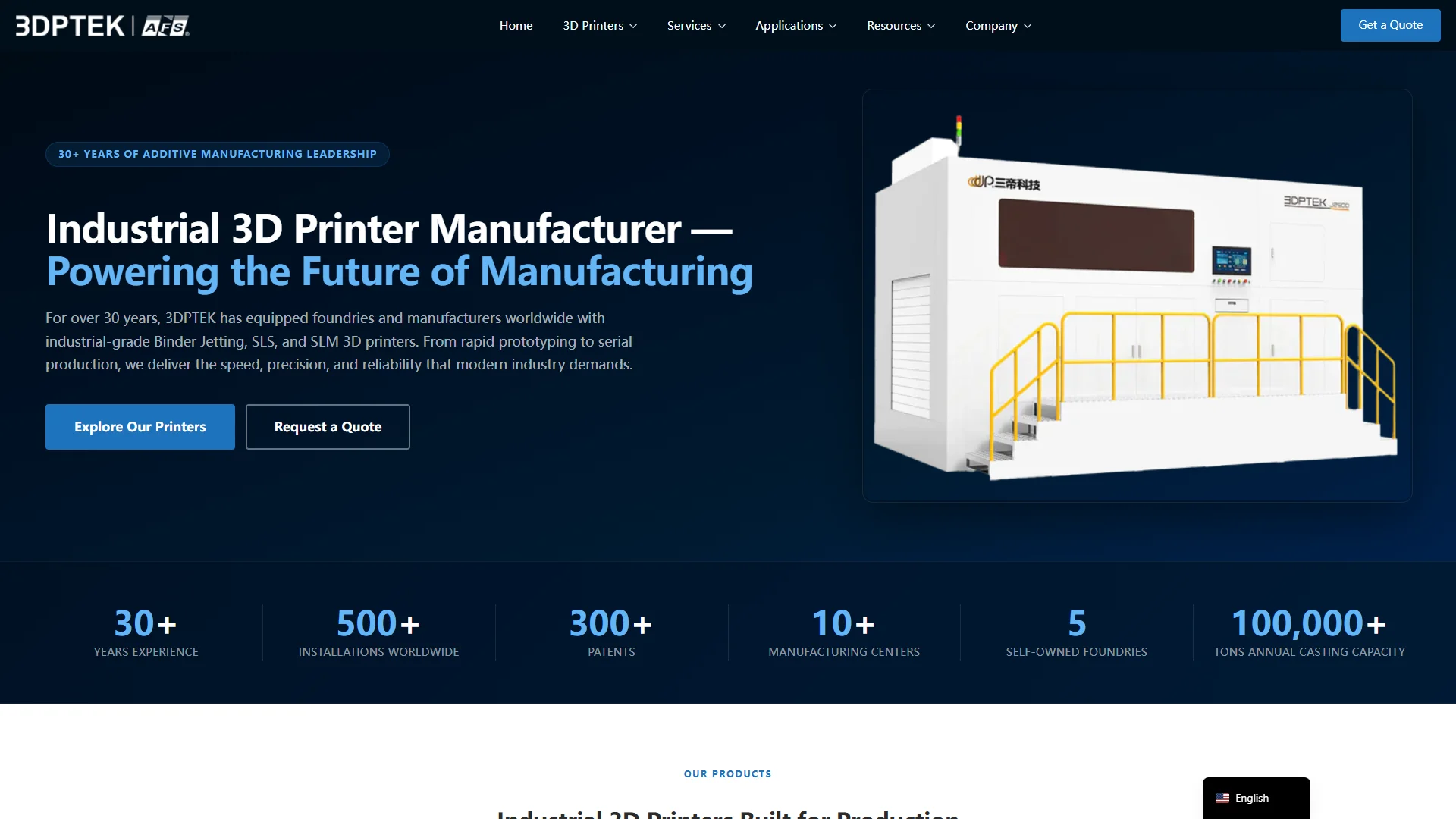
This limited disclosure means Lyafs should not be compared on unverified specifications. Its stated combination of industrial 3D printing and casting services may be relevant to buyers seeking more than one manufacturing route, but the exact relationship between equipment sales, contract production, and casting support should be clarified before procurement.
Pros / Key Features
- Positioned around industrial 3D-printer manufacturing.
- Also associated in the supplied material with casting services.
- Could be relevant to projects comparing additive and casting workflows.
- Specific machines, materials, certifications, service regions, and delivery commitments were not clearly documented.
Use Cases / Best For
Lyafs may be worth considering for industrial buyers investigating equipment and casting-service options from one source. It is best suited to an initial supplier enquiry rather than an immediate specification-based selection. Buyers should request machine data, casting capabilities, production examples, quality procedures, inspection documentation, and after-sales arrangements.
How to Choose Among Chinese 3D Printer Suppliers
1. Match the process to the part
Start with the required geometry, strength, surface finish, dimensional accuracy, production volume, and post-processing route. Metal laser powder-bed fusion, SLS, MJF, FDM, resin processes, CNC machining, and casting each have different cost and performance profiles.
2. Confirm the material specification
Do not select a supplier based only on a material name. Request the exact grade, powder or filament source, mechanical data, thermal properties, traceability information, and whether the data applies to the stated print orientation and post-processing condition.
3. Review quality controls
For production parts, ask about inspection equipment, calibration, dimensional reports, process monitoring, lot traceability, nonconformance handling, and applicable quality certifications. Certification claims should be supported by current certificates issued to the relevant legal entity.
4. Separate equipment sales from service production
A printer manufacturer, contract manufacturer, exhibition, and online service bureau serve different roles. Buyers should identify whether they need to purchase equipment, outsource parts, attend an industry event, or locate several vendors for comparison.
5. Evaluate application support
Technical support can be as important as the machine itself. Confirm installation, operator training, software updates, maintenance response, spare-parts availability, process development, and support in the buyer’s region.
6. Validate delivery and total cost
Compare the complete cost, including equipment, software, consumables, inert gas, powder handling, post-processing, tooling, inspection, shipping, duties, installation, and maintenance. Service lead times should be confirmed in writing for the exact part and quantity.
7. Request representative samples
A sample built with the intended material and process is often more informative than a marketing specification. Ask for a test piece that includes thin walls, holes, overhangs, surface transitions, and the most demanding features in the production design.
Final Verdict
TCT Asia is the strongest starting point for broad supplier discovery and industry research, which is why it is ranked first, but it should not automatically be treated as a printer manufacturer. Anebon is more relevant to custom parts and hybrid additive-subtractive manufacturing. China 3D Printing presents the broadest documented process and material range among the listed service providers. FormnextAsiaShenzhen is best understood as an exhibition resource, while 3D FastForm has the clearest specialized focus on metal SLM equipment and dental applications. IN3DTEC and Lyafs require more direct technical verification because the supplied public information is limited. The most suitable choice depends on whether the buyer needs supplier discovery, contract production, specialized metal equipment, or a broader manufacturing partner.
FAQs
Are all seven entries direct 3D printer manufacturers?
No. The list includes an industry platform, an exhibition resource, contract manufacturing providers, equipment-focused companies, and brands with limited publicly documented information. Buyers should first identify the type of partner they need.
Which supplier has the broadest documented technology range?
China 3D Printing has the broadest documented range in the supplied research material, including metal laser-based printing, SLS, FDM, and HP Multi Jet Fusion, along with a wide selection of metal, plastic, nylon, and elastomeric materials.
What should a buyer request before placing an order?
A buyer should request a process-specific quotation, material and mechanical data, sample or test-part results, dimensional tolerances, inspection documentation, lead time, post-processing details, warranty or service terms, and confirmation of the supplier’s legal entity and certifications.